
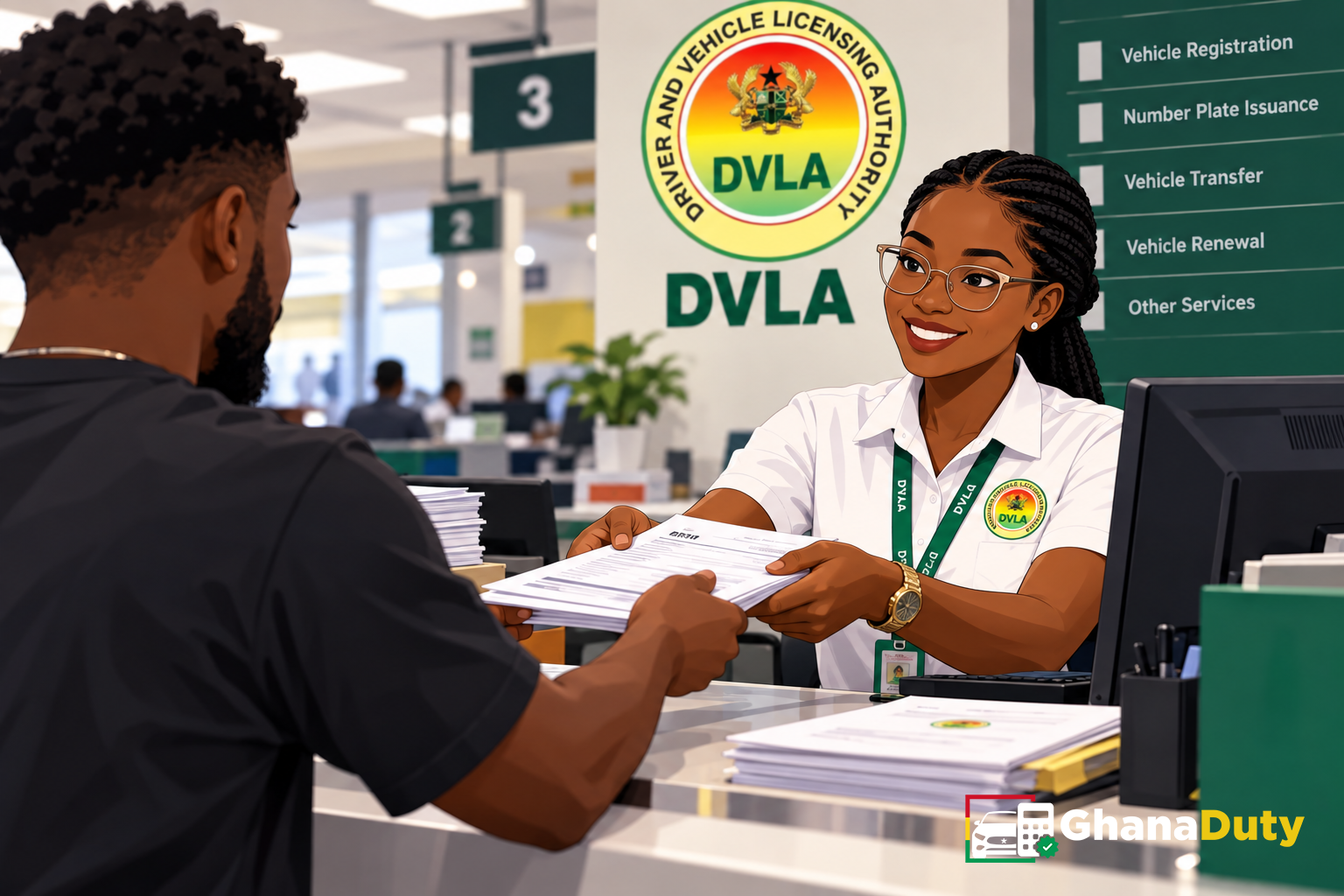
If you already own a registered vehicle in Ghana, the arrival of DVLA's new number plate format doesn't just affect new registrations — it means your existing vehicle will eventually need to go through re-registration to move onto the new system. Here's what that process looks like, based on DVLA's own process documentation, plus the "onboarding" steps the authority is asking owners to complete ahead of time.
New registration vs. re-registration — what's the difference?
DVLA has published two related but distinct process flows: one for vehicles being registered for the very first time, and one for vehicles that are already registered and moving to the new plate format. They're nearly identical, with one key difference in the middle step.
New vehicle registration (3 stages)
Service Request — You send a service request to DVLA. DVLA verifies your vehicle's records and sends you an appointment notice.
Registration — You pay for the service. DVLA reviews your documents and physically inspects the vehicle, assigns your registration number, then electronically encodes and validates the number plate.
Number Plate — Your plate is ready within 48 hours. You're invited back to present the vehicle, and DVLA affixes and activates the plate on the spot.
Vehicle re-registration (3 stages)
Service Request — Same as above: request, verification, appointment notice.
Re-registration — You pay for the service. Instead of a fresh document review and inspection, DVLA onboards your existing vehicle into the new system, assigns your new registration number, and encodes/validates the plate.
Number Plate — Same 48-hour turnaround, same affixing and activation process.
In both cases, the plate itself is ready fast — DVLA's stated turnaround is two days from registration/re-registration to a physical, activated plate.
The "onboarding ahead of time" process
Separately, DVLA has outlined a five-step vehicle information onboarding process — essentially, the groundwork owners can complete before the formal re-registration exercise reaches them, so the process at the counter is faster:
Present vehicle for inspection
DVLA verifies and authenticates your vehicle documents
Generate invoice and pay for the service
Identity verification and document upload (DVLA's materials reference an ECOWAS Identity Card as an example verification document)
Obtain your Certificate of Title and Vehicle Registration Card
DVLA's own framing of this is worth repeating directly: "It is our collective and shared responsibility to encourage vehicle owners to onboard ahead of the Re-registration exercise." In other words — this isn't positioned as optional early-bird paperwork. DVLA is actively asking owners, dealers, and (implicitly) platforms like ours to help spread the word so people aren't caught off guard when the formal re-registration exercise reaches their vehicle category or region.
Why getting ahead of this matters
Two things from DVLA's own numbers make early onboarding worth taking seriously:
Congestion risk. DVLA has explicitly cited congestion at service points and testing stations as a known failure mode of the current system, driven by owners all showing up in the same narrow window (historically, the first quarter of each year). A re-registration exercise covering the entire existing vehicle population is, by nature, a much bigger surge than that annual pattern — owners who complete onboarding early avoid being part of the peak crush.
A verified paper trail matters more under this system. Because one of the stated goals of the redesign is keeping stolen and uncustomed vehicles out of the registration database, having your Certificate of Title, Vehicle Registration Card, and identity documents in order — before you're asked for them — puts you in a much stronger position than trying to assemble them under pressure.
What documents to have ready
Based on DVLA's onboarding flow, the core things to have on hand are:
Proof of identity (DVLA's materials reference an ECOWAS Identity Card as an example)
Existing vehicle documents (registration papers, and for imported vehicles, your customs/clearance documentation)
Proof of ownership / purchase documentation
If your vehicle was imported and you're still holding onto customs paperwork from that process, this is a good moment to make sure it's complete and accessible — not filed away somewhere you'll have to dig for it later.
Still to be confirmed
DVLA's briefing sets out the process clearly but doesn't specify exact regional rollout dates, fees, or the order in which vehicle categories will be called forward for re-registration. We'll update this guide as soon as those specifics are published.
In the meantime, if you're still in the process of importing a vehicle into Ghana, get your duty numbers sorted early with our Ghana import duty calculator — one less unknown to deal with before you're navigating a new registration system too.
Process details in this article are drawn from the Technical Committee briefing "What You Should Know About Ghana's New Vehicle Registration Number Plate," November 2025.


%22%3E%3Cellipse%20cx%3D%22100%22%20cy%3D%22128%22%20rx%3D%2272%22%20ry%3D%227%22%20fill%3D%22%23000%22%20opacity%3D%22.10%22%2F%3E%3Crect%20x%3D%2226%22%20y%3D%2282%22%20width%3D%22148%22%20height%3D%2222%22%20rx%3D%2211%22%20fill%3D%22%239c5236%22%2F%3E%3Crect%20x%3D%2240%22%20y%3D%2240%22%20width%3D%22120%22%20height%3D%2244%22%20rx%3D%2214%22%20fill%3D%22%239c5236%22%2F%3E%0A%20%20%20%20%20%20%20%20%3Crect%20x%3D%2251%22%20y%3D%2250%22%20width%3D%2232%22%20height%3D%2226%22%20rx%3D%226%22%20fill%3D%22rgba(255%2C255%2C255%2C.7)%22%2F%3E%0A%20%20%20%20%20%20%20%20%3Crect%20x%3D%2292%22%20y%3D%2250%22%20width%3D%2232%22%20height%3D%2226%22%20rx%3D%226%22%20fill%3D%22rgba(255%2C255%2C255%2C.7)%22%2F%3E%0A%20%20%20%20%20%20%20%20%3Crect%20x%3D%22133%22%20y%3D%2250%22%20width%3D%2219%22%20height%3D%2226%22%20rx%3D%226%22%20fill%3D%22rgba(255%2C255%2C255%2C.7)%22%2F%3E%3Ccircle%20cx%3D%2260%22%20cy%3D%22108%22%20r%3D%2215%22%20fill%3D%22%23262a33%22%2F%3E%3Ccircle%20cx%3D%2260%22%20cy%3D%22108%22%20r%3D%2215%22%20fill%3D%22none%22%20stroke%3D%22%23454c5a%22%20stroke-width%3D%221.5%22%2F%3E%3Ccircle%20cx%3D%2260%22%20cy%3D%22108%22%20r%3D%226%22%20fill%3D%22%238a919e%22%2F%3E%3Ccircle%20cx%3D%22140%22%20cy%3D%22108%22%20r%3D%2215%22%20fill%3D%22%23262a33%22%2F%3E%3Ccircle%20cx%3D%22140%22%20cy%3D%22108%22%20r%3D%2215%22%20fill%3D%22none%22%20stroke%3D%22%23454c5a%22%20stroke-width%3D%221.5%22%2F%3E%3Ccircle%20cx%3D%22140%22%20cy%3D%22108%22%20r%3D%226%22%20fill%3D%22%238a919e%22%2F%3E%3C%2Fg%3E%3C%2Fsvg%3E)
%22%3E%3Cellipse%20cx%3D%22100%22%20cy%3D%22128%22%20rx%3D%2272%22%20ry%3D%227%22%20fill%3D%22%23000%22%20opacity%3D%22.10%22%2F%3E%3Crect%20x%3D%2230%22%20y%3D%2282%22%20width%3D%22140%22%20height%3D%2222%22%20rx%3D%2211%22%20fill%3D%22%238a6417%22%2F%3E%3Cpolygon%20points%3D%2255%2C84%2062%2C42%20138%2C42%20148%2C84%22%20fill%3D%22%238a6417%22%20stroke%3D%22%238a6417%22%20stroke-width%3D%2210%22%20stroke-linejoin%3D%22round%22%2F%3E%0A%20%20%20%20%20%20%20%20%3Cpolygon%20points%3D%2268%2C80%2073%2C50%20127%2C50%20134%2C80%22%20fill%3D%22rgba(255%2C255%2C255%2C.7)%22%20stroke%3D%22rgba(255%2C255%2C255%2C.7)%22%20stroke-width%3D%224%22%20stroke-linejoin%3D%22round%22%2F%3E%0A%20%20%20%20%20%20%20%20%3Crect%20x%3D%2266%22%20y%3D%2236%22%20width%3D%2268%22%20height%3D%225%22%20rx%3D%222.5%22%20fill%3D%22%238a6417%22%2F%3E%3Ccircle%20cx%3D%2260%22%20cy%3D%22108%22%20r%3D%2215%22%20fill%3D%22%23262a33%22%2F%3E%3Ccircle%20cx%3D%2260%22%20cy%3D%22108%22%20r%3D%2215%22%20fill%3D%22none%22%20stroke%3D%22%23454c5a%22%20stroke-width%3D%221.5%22%2F%3E%3Ccircle%20cx%3D%2260%22%20cy%3D%22108%22%20r%3D%226%22%20fill%3D%22%238a919e%22%2F%3E%3Ccircle%20cx%3D%22140%22%20cy%3D%22108%22%20r%3D%2215%22%20fill%3D%22%23262a33%22%2F%3E%3Ccircle%20cx%3D%22140%22%20cy%3D%22108%22%20r%3D%2215%22%20fill%3D%22none%22%20stroke%3D%22%23454c5a%22%20stroke-width%3D%221.5%22%2F%3E%3Ccircle%20cx%3D%22140%22%20cy%3D%22108%22%20r%3D%226%22%20fill%3D%22%238a919e%22%2F%3E%3C%2Fg%3E%3C%2Fsvg%3E)