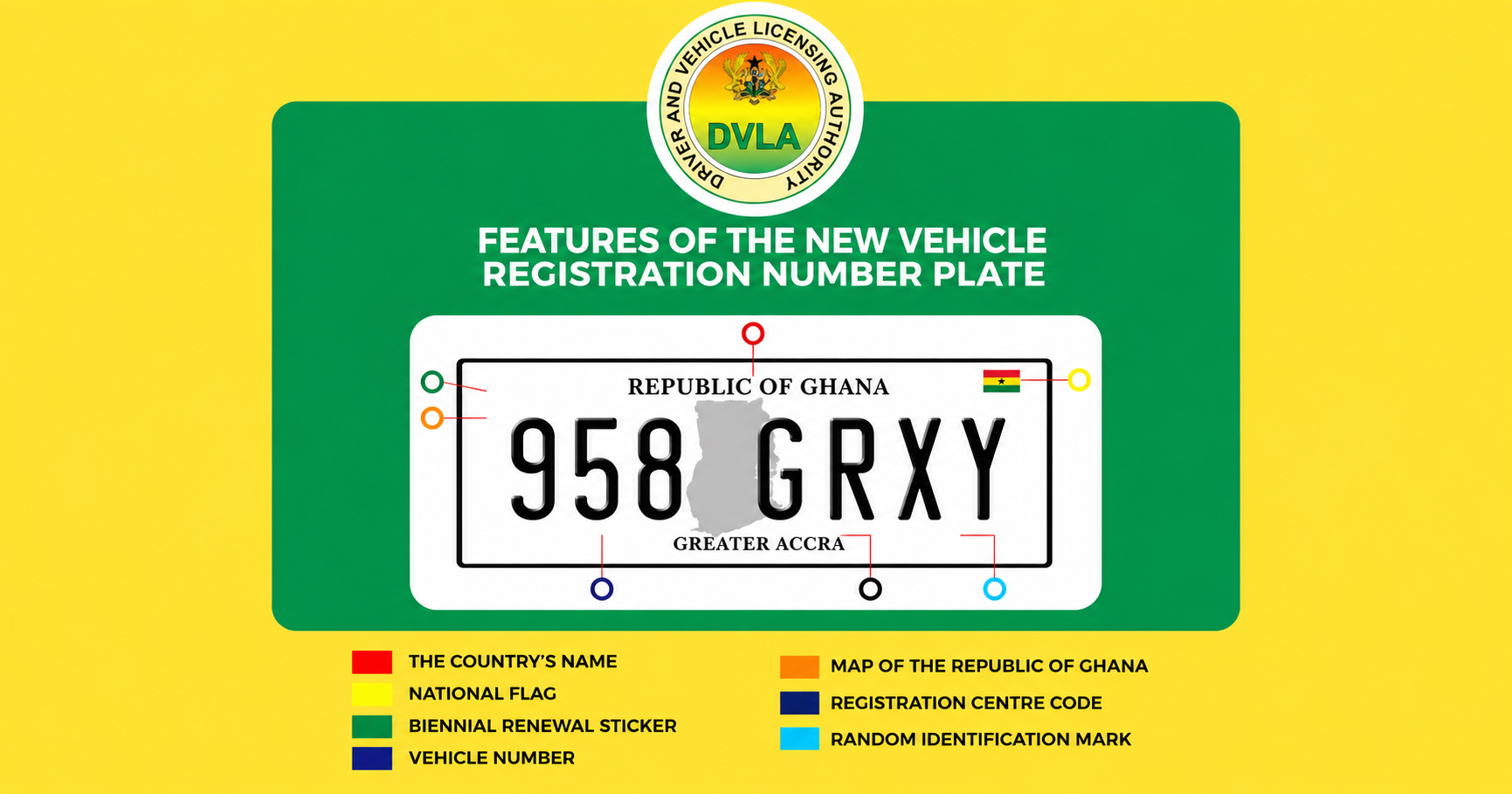
The DVLA is rolling out new number plates that, according to the agency's boss, will make it much harder to run a fake registration and much easier to pull up a vehicle's real details on record. If you're importing a car or planning to, this is worth paying attention to, even though the story so far is short on the technical specifics of how the system actually works.
Here's the practical angle. Right now, fake or duplicated plates are a real headache in the used and imported car market in Ghana. You've probably heard of, or maybe experienced, buying a vehicle where the registration details on the plate don't quite match what's in the actual DVLA system, or a plate that was cloned from another car entirely. That kind of mess can blow up months after you've paid for a car, especially if you bought it secondhand from someone other than the original importer.
If the new plates genuinely make registrations more traceable and harder to fake, that's good news for buyers doing due diligence. It means when you check a plate against a vehicle, you should be able to trust that what comes back actually matches the car in front of you, its engine number, chassis details, and registration history. For dealers moving several imports at a time, that kind of reliability cuts down on disputes with customers down the line and makes it easier to prove a vehicle is clean before you hand over the keys.
What this doesn't change
It's important to be clear that new plates on their own don't touch duty, benchmark values, or the CEPS clearance process. Whatever number plate ends up on your car, you still go through the same import valuation, still pay the same duty based on CIF value, age, and engine size, and still need your paperwork straight at the port before the vehicle ever gets to the registration stage. Plates come after clearance, not before.
What's not yet clear from what DVLA has said publicly is the rollout timeline, whether existing vehicles will need to swap plates, and what it costs. Until those details are confirmed, it's probably too early to plan around this beyond just being aware it's coming and keeping an eye on official DVLA communication rather than rumors.
For now, the sensible move if you're buying an imported car, especially a used one already registered in Ghana, is to always verify the vehicle's details directly with DVLA rather than trusting the plate alone. Pulse Ghana has the original report on the DVLA boss's comments if you want to follow how this develops.
And if you're still at the stage of figuring out what a vehicle will actually cost you to bring in, before plates or registration even come into it, running the numbers through Ghana Duty's calculator is a decent way to get a realistic landed cost estimate first.